
Hello, I’m Allen. For over 20 years, I’ve been running a factory in China with seven production lines dedicated to manufacturing the world’s most reliable tool storage and hand tool solutions. I work daily with B2B clients across the USA, Europe, and Australia—people like Mark Thompson, who demand good quality equipment for their hardware stores and automotive workshops. I've seen trends come and go, but one debate remains constant in the industry: the ratchet wrench versus the standard combination wrench.
If you are building a toolbox or stocking a tool bag for the first time, you might wonder if the modern ratchet wrench has made the traditional non-ratcheting wrench obsolete. The answer is nuanced. While the ratchet wrench offers incredible speed, the regular wrench offers unmatched strength. In this guide, I will break down the ratcheting vs non debate to help you decide which wrench set deserves the prime spot in your drawer.
What Exactly is the Difference Between a Ratchet Wrench and a Non-Ratcheting Combination Wrench?
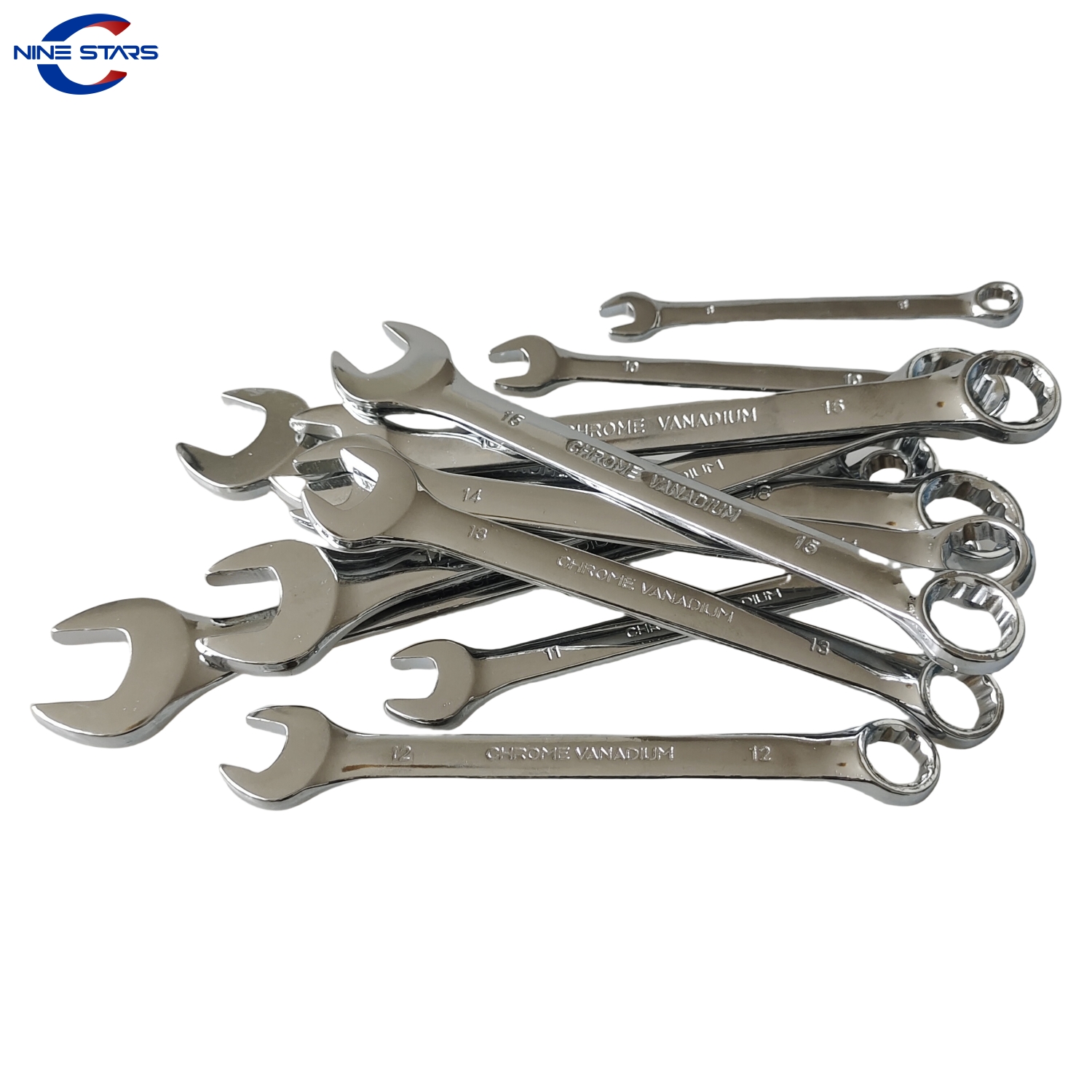
To understand the ratcheting vs non comparison, we first need to look at the anatomy of the tools. A standard combination wrench (or non-ratcheting wrench) is a single piece of forged steel. It has an open end on one side and a closed box end on the other. It is a simple, static tool. There are no moving parts. You put it on a bolt, turn it, lift it off, reposition it, and turn it again.
A ratchet wrench, specifically a ratcheting combination wrench, looks very similar at first glance. It has the same open end. However, the box end contains a ratcheting mechanism. This mechanism allows the internal ring to spin in one direction while gripping in the other. This means you can keep the wrench on the fastener and swing it back and forth to tighten or loosen it. It combines the profile of a wrench with the action of a socket ratchet. This simple addition of a gear system changes the entire experience of using a wrench.
Why is Speed the Biggest Selling Point of a Ratcheting Wrench?
The primary advantage of a ratchet wrench is speed. In a professional environment, time is money. When you use a regular wrench, you have to physically lift the tool off the nut after every turn, reset the angle, and slide it back on. In a wide-open space, this isn't a huge deal. But if you are working on a Jeep suspension or deep inside an engine bay, finding the bolt head again by feel can be frustrating and slow.
With a ratchet wrench, you never lose contact with the fastener. You simply wiggle your wrist back and forth. This continuous motion can speed up the work dramatically. I have timed mechanics on my assembly lines, and using ratcheting wrenches may cut the time required to install a long bolt in half. If you have a bolt with long threads and you can't use an impact wrench or a standard ratchet and socket because of clearance issues, the ratchet wrench is the hero of the day. It makes the job fluid and much less tedious.
Can a Ratchet Wrench Handle the Same High Torque as a Regular Wrench?
Here is where the non-ratcheting wrench fights back. A standard combo wrench is a solid chunk of steel. It is incredibly strong. You can apply massive amounts of torque to it. You can hit it with a mallet (though you shouldn't). You can even slide a pipe or cheater bar over the end to get more leverage on a frozen bolt (again, not recommended for safety, but people do it). The tool will likely survive because there is nothing to break.
A ratchet wrench, however, relies on a small mechanical gear system inside the box end. While technology has improved and a modern ratchet wrench today is much stronger than those from the 90s, it still has limits. If you try to break loose a rusted, seized 24mm bolt with a ratchet wrench by applying high torque, you risk stripping the internal teeth of the ratcheting mechanism. Once those teeth strip, the tool is useless. Therefore, the general rule is: use a non-ratcheting box end to break the bolt loose, then switch to the ratchet to spin it off quickly.
How Does the Size and Profile Impact Access to Tight Spaces?
One of the subtle disadvantages of a ratchet wrench is its physical size. To house the gears and the pawls of the ratcheting mechanism, the box end of a ratchet wrench is typically thicker and slightly wider than a regular wrench. In 90% of situations, this extra bulk doesn't matter. But in truly tight mechanical assemblies, every millimeter counts.
A standard combination wrench has a very thin wall profile. It can slide into narrow gaps where a ratchet wrench might get stuck. Furthermore, many standard wrenches feature an offset box end (usually angled at 15 degrees) that allows you to reach into a recess to grab a nut. While some reversible ratchet wrenches have an offset, many flat-style ratcheting wrenches do not, which can make your knuckles scrape against the work surface. If you are working on a compact car engine or a complex piece of machinery, the slim profile of a non-ratcheting wrench often wins the access battle.
What Are the Limitations of Non-Ratcheting Wrenches in Confined Spaces?
While non-ratcheting wrenches fit into tighter gaps, they require more room to swing. This is a concept known as "swing arc." To turn a nut with a standard 12-point box end, you generally need at least 30 degrees of swing room to rotate the fastener enough to reset the wrench. If you are in a confined space where you can only move your hand 10 or 15 degrees, a regular wrench becomes almost impossible to use. You turn it, hit the wall, and can't turn it enough to lift and reposition it for the next bite.
This is where the ratchet wrench shines again. High-quality ratcheting wrenches often have 72-tooth or even 100-tooth gears. A 72-tooth ratchet only needs 5 degrees of swing arc to engage the next tooth. This means you can work in incredibly cramped quarters—like between a Jeep engine block and the firewall—moving the bolt millimeters at a time with tiny wrist movements. In these tight spaces, the ratchet wrench is the only hand tool that can do the job efficiently.
Why Should Every Mechanic Own a Standard Combination Wrench Set?
You might be thinking, "If ratchets are faster and work in tight swings, why buy regular ones?" The answer lies in reliability, cost, and longevity. A standard combination wrench set is practically indestructible. It is the backbone of any professional toolbox. When you encounter a bolt that requires immense force—higher torque than a standard ratchet can take—you need that solid steel connection.
Additionally, non-ratcheting wrenches are significantly cheaper. You can buy a high-end set of regular and ratcheting wrenches for your shop, but if you are on a budget, you get more sizes and better steel quality for your money with standard combo wrenches. Also, for dirty jobs involving mud, grease, and grit (like working on a Jeep after off-roading), standard wrenches are easier to clean. Grit can get inside a ratcheting mechanism and cause it to bind, whereas a standard wrench just needs a wipe down. Every mechanic needs a set of these for the heavy lifting.

Are Flex Head Ratcheting Wrenches the Ultimate Versatile Tools?
If you want to maximize versatility, you should look at flex head ratcheting wrenches. These tools feature a box end that pivots on a hinge. This design allows you to angle the head to reach around obstacles or access bolts at awkward angles that a straight wrench could never touch.
A flex head wrench gives you the speed of a ratchet, the access of an offset wrench, and the ability to work around corners. They are fantastic for DIY enthusiasts and professionals alike. However, the hinge is another potential weak point. Like the ratchet mechanism itself, the flex head joint can become loose over time or break under extreme abuse. But for pure problem-solving capability, a flex head ratchet wrench is one of the most versatile tools you can own. It will come in handy more often than you expect.
How Do Cost and Durability Compare: Ratcheting vs Non-Ratcheting?
As a factory owner, I can tell you that manufacturing a ratchet wrench is more complex than a standard one. It involves precision machining of small gears, springs, and pawls. Consequently, ratcheting wrenches are more expensive. A good set of metric ratcheting wrenches might cost double what a comparable set of non-ratcheting wrenches costs.
In terms of durability, the non-ratcheting wrench wins hands down. It has a virtually unlimited lifespan. I have seen standard wrenches passed down from grandfather to grandson. Ratcheting wrenches, even good quality ones, have moving parts that will eventually wear out. The ratcheting mechanism can slip, the reversing lever can break, or dirt can jam the gears. However, for the professional, the time saved by using a ratchet pays for the tool many times over before it ever fails. It is an investment in efficiency.
When Should You Reach for a Socket and Ratchet Instead of a Wrench?
It is important to remember that wrenches are not your only option. A socket and a 3/8-inch or 1/2-inch drive ratchet handle are generally the first choice for most mechanics. Sockets cover the nut completely, are less likely to slip, and the ratcheting handles are generally stronger than the small mechanisms inside a ratchet wrench.
You should reach for wrenches whenever a socket won't fit. This usually happens when there is not enough vertical clearance above the fastener, or when the bolt is on a long threaded rod that prevents the socket from seating. In these cases, the ratchet wrench is the perfect bridge between the two. It offers the low profile of a wrench with the ratcheting speed of a socket handle. But if you have open space, a socket set is often the faster and more secure method, especially for high torque applications.
Which Wrench Set Should You Buy First for Your Toolbox?
If you are just starting to build your toolbox or tool bag, my advice is to start with a high-quality set of non-ratcheting combination wrenches. They are cheaper, stronger, and force you to learn the "feel" of tightening bolts properly. They are essential for breaking loose tight fasteners and will never let you down. Look for a set that includes common sizes like 10mm, 13mm, and 18mm (common on many European cars).
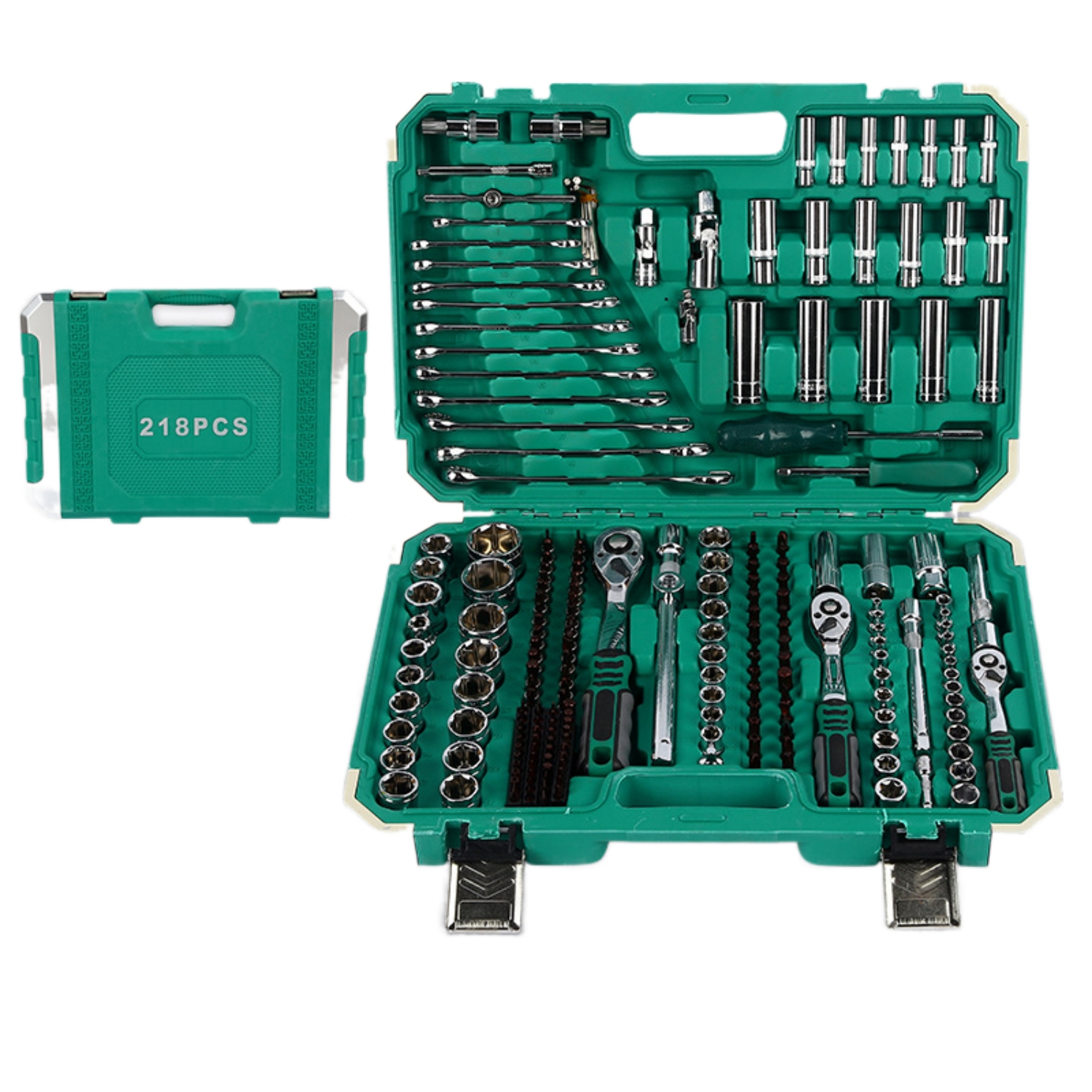
However, if you can afford it, or if you are doing frequent automotive repair, buying a set of ratchet wrenches is the best upgrade you can make. They make the work fun and fast. A great strategy is to buy a comprehensive 151-piece tool kit that includes sockets, a ratchet, and a set of standard wrenches. Then, add a specific set of ratcheting wrenches (perhaps Gearwrench style or similar) as you identify the need. Ultimately, a pro needs both. You use the regular wrench to break the bolt loose, and the ratchet wrench to remove it. They are teammates, not rivals.
Key Takeaways
The battle between ratcheting vs non-ratcheting wrenches isn't about one being "better" than the other; it's about using the right tool for the specific job.
- Speed vs. Strength: Ratchet wrenches are built for speed and efficiency. Non-ratcheting wrenches are built for strength and high torque.
- The "Break and Spin" Technique: The best workflow is often to use a regular wrench (or breaker bar) to break a stubborn bolt loose, then switch to a ratchet wrench to spin it off quickly.
- Access is Key: Standard wrenches have thinner profiles for tight gaps. Ratchet wrenches need less swing arc (5 degrees) for confined spaces where you can't move the handle much.
- Maintenance: Ratcheting mechanisms need to be kept clean and occasionally oiled. Solid wrenches are virtually maintenance-free.
- The Ultimate Setup: For a complete garage setup, you should aim to own both types. They complement each other perfectly to handle any repair job you encounter.
- Safety First: Never use a cheater bar or pipe on a ratchet wrench. You will break the gears. Only use leverage extenders on solid, non-ratcheting tools.
Post time: 12-04-2025